
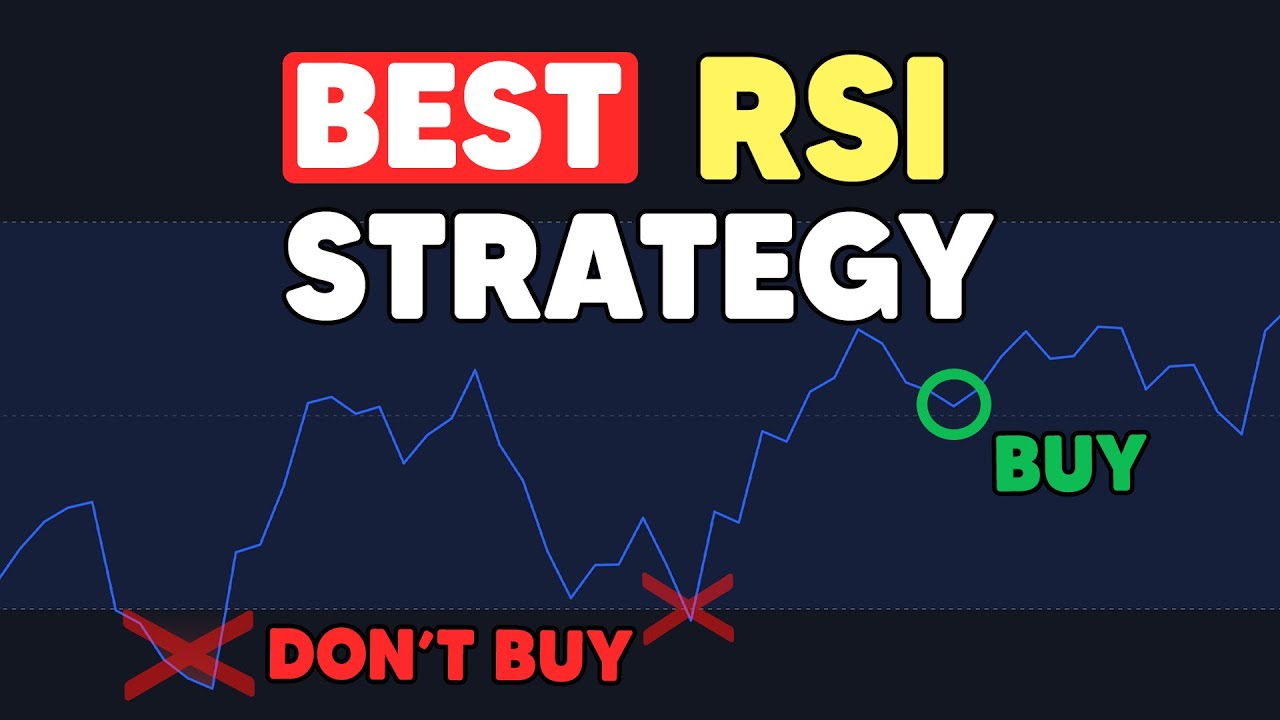
Many people use the RSI indicator completely wrong, and in this tutorial, I’m going to show you the real ways to use it for trading Stocks, Crypto, or Forex So, the misconception is that the overbought and oversold levels on the RSI are specifically for finding reversals.
If the RSI is above 70 this is where the market is considered overbought, and we can expect the price to reverse down Same with the RSI going below 30, the market is considered oversold, and we can expect the market to reverse up. Well, this is completely wrong.
It’s only useful if you’re using it as a specific exit point in trading strategies in combination with other indicators, regardless of the overall trend. You will most likely not predict actual market tops and bottoms by just using the 70 and 30 lines, and it’s super frustrating to see so many traders on YouTube present it like this.
So, the actual way to use the RSI is as a momentum indicator. The most important level on the RSI is not 70 or 30. It’s the 50 level,l which is this dotted line right in the middle. So, once the RSI cleanly breaks above the 50 level, this is a sign that the market is bullish.
And once the RSI cleanly breaks BELOW the 50 level, this is a sign that the market is bearish. Any move back or around the 50 level is like a support or resistance level for the momentum.
You can even draw a box around it to avoid fake outs here even more because if you get a move above or below the 50 level it could easily be a fake out and the market could still be in the same trend, so retests around the 50 level are actually great entries to hop into an uptrend or a downtrend or at least to begin developing a bullish or bearish bias on the market.
Now for divergences. A divergence is when the price is making higher highs, but the RSI is making lower highs (example).
This would be bearish, and we can expect the market to go down. These are actually great to use with the RSI if you use it correctly, and this is where the 30 and 70 levels actually come most in handy because RSI divergences are most significant if they appear above the 70 level and below the 30 level.
And this next tip for RSI is something that I’ve never seen on YouTube before and it actually involves the setting within the indicator so if you’ve ever gone into the settings of the RSI, you’ve probably seen the number 14 here as the RSI length while what this means is that we only want to consider divergences on the RSI if there are 14 candles or lower apart from each other. So, we wouldn’t want to consider this as bearish.
Divergence because it’s way more than 14 bars apart, but for this.
Divergence we could consider it and put more emphasis on it in our analysis if you increase the length you can use this as an ideal amount of bars for the divergences you find on the RSI lastly is the moving average on the RSI the way you could use this this is as a signal line like when the RSI crosses over the MA.
As a buy signal for a part of a trading strategy or just as a way to see the RSI as a smooth value because when the ma crosses over the 50 line it’s more significant than just the RSI crossing over the 50 line for following trends as I described previously. All in all the RSI is a very simple and useful indicator for finding trends, trading divergences, and for using it in strategies.